
“Kim works tirelessly to come up with creative avenues for expression that are specific to each group she works with. She is a joy and a gift to work alongside and I hope to continue working with her for years to come.”
Lead Organizer and Event Planner, Denver-based nonprofit
“Kim Wilson is a force. A force for change, a force for good, and a force to be reckoned with. As a speaker and facilitator, Dr. Wilson connects deeply her audiences. Dr. Wilson worked closely with my students, and gave an impassioned lecture to our wider campus community that people are still talking about years later.”
Tenured Faculty, Private university
“Kim Wilson exceeded all my expectations when I invited her to give a public talk at my institution. My expectations were high, based on my experience of seeing her present at an academic conference. But Dr. Wilson in action with a mic in her hand? The intelligence, the passion, the sense of humor—well, let me save you time: invite her.”
Tenured Faculty, Public research university
SPEAKING AND INTERACTIVE TALKS
Conversations worth carrying back to work.
Talks for conferences, staff development days, leadership gatherings, and anywhere people come together to learn and grow. Some groups want a chance to think together; others need space to listen and reflect. I shape each talk around the people in the room.
HOW MY TALKS WORK
Thoughtful talks, made for real people.

Engaging by design. Every talk and presentation is built to involve the audience, whether that means discussion, reflection, or a straight presentation that still invites people in. The format is shaped around your group and your goals.
Built on experience. Like my workshops, these talks draw on my work in many different settings, and they start from the realities of the people in the room.
People-centered. My talks center the people who make an organization run, from frontline staff and team leads to the managers and senior leaders who guide them. Their work and experience shape what I bring into the room, from the examples I choose to the questions I ask.
READY-TO-BOOK TALKS
Choose a talk
GREAT FOR: Staff development days, team retreats, HR and professional associations, and nonprofit networks.
Avoiding Conflict Doesn’t Make Things Better (and What to Do Instead)
OVERVIEW: Conflict doesn’t feel good. It creates tension that is felt, even before people put it into words. We are taught to avoid conflict because we don’t have tools for how to respond when we or others are made to feel uncomfortable. Wherever two or more people are gathered, you have the potential for conflict. Learning how to more skillfully navigate conflict will allow your team to handle discomfort and address problems before they turn into crises. In this one-hour talk I introduce the early signs that let you know something is amiss, walk you through alternative responses, and invite you to reflect on everyday conflicts that show up in your workplace, including who feels able to raise them.
WHAT YOU GET
A planning call to discuss your group’s needs.
A facilitated one-hour talk tailored to your setting.
A way to identify early warning signs.
Practical ways to address everyday conflict.
Time to reflect on how conflict shows up in your work.
A one-page handout.
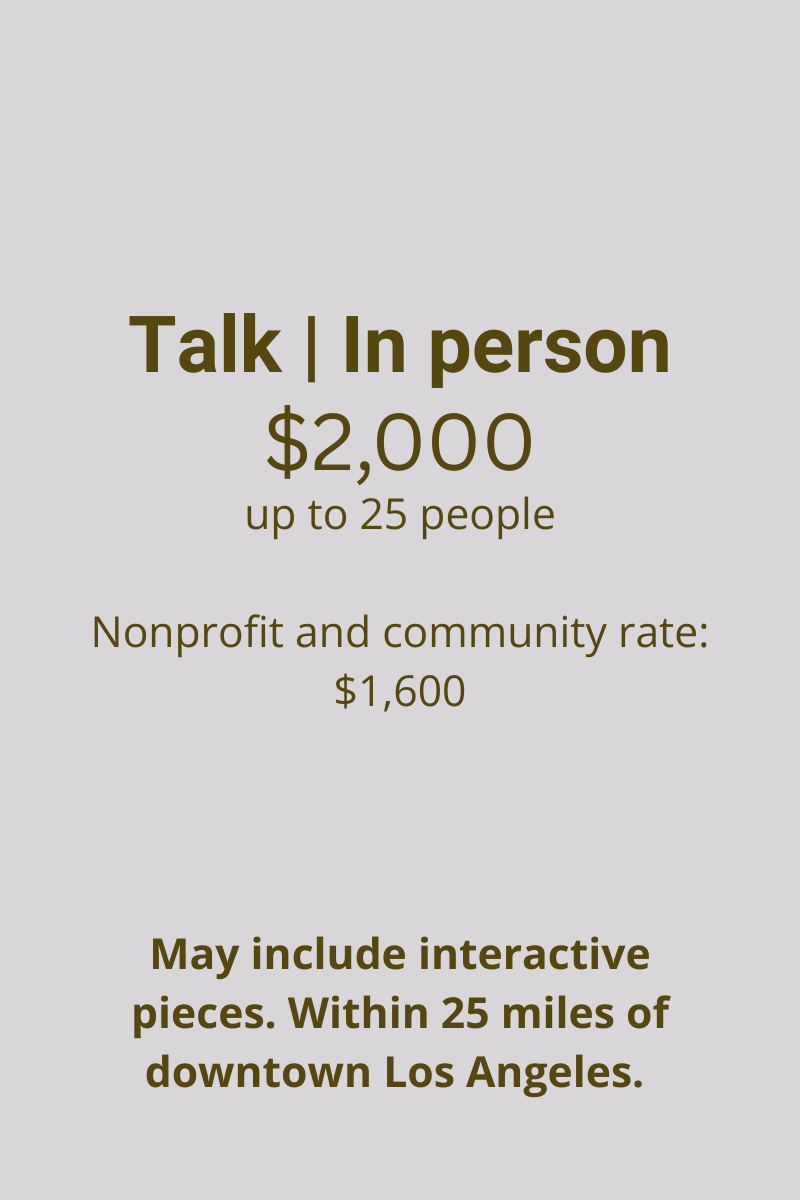
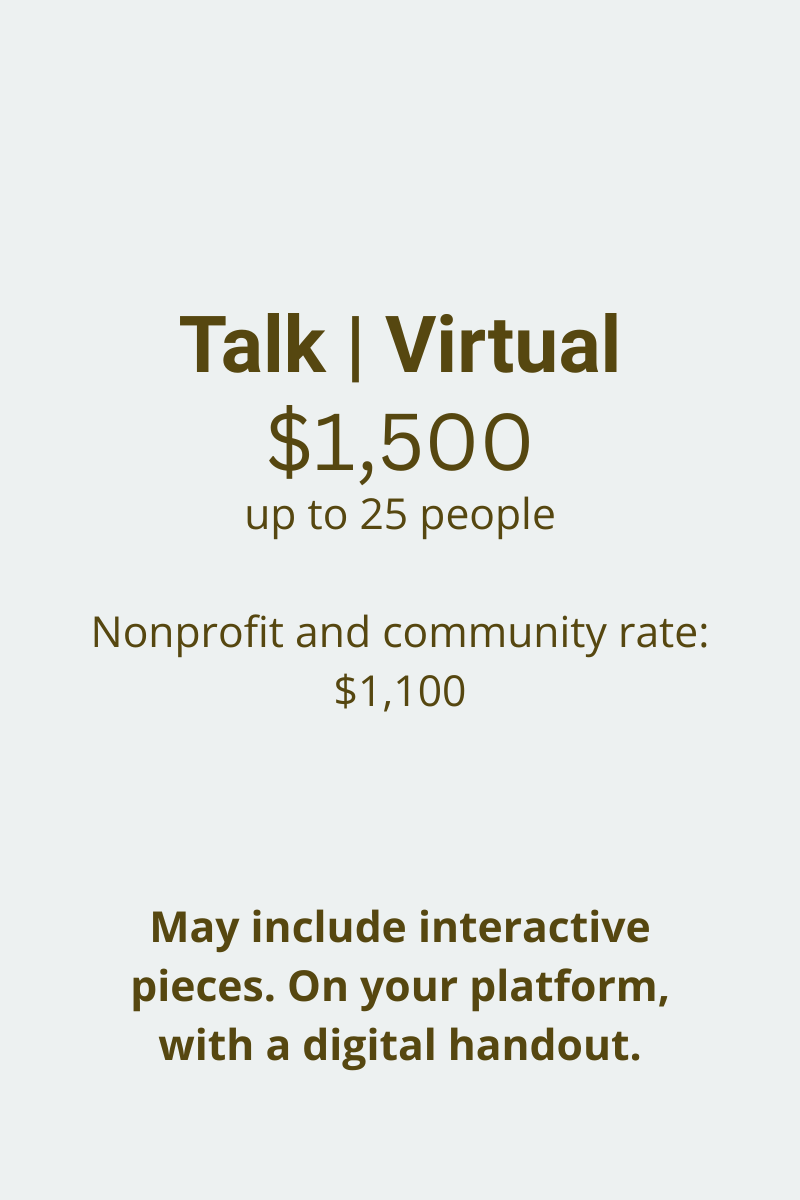
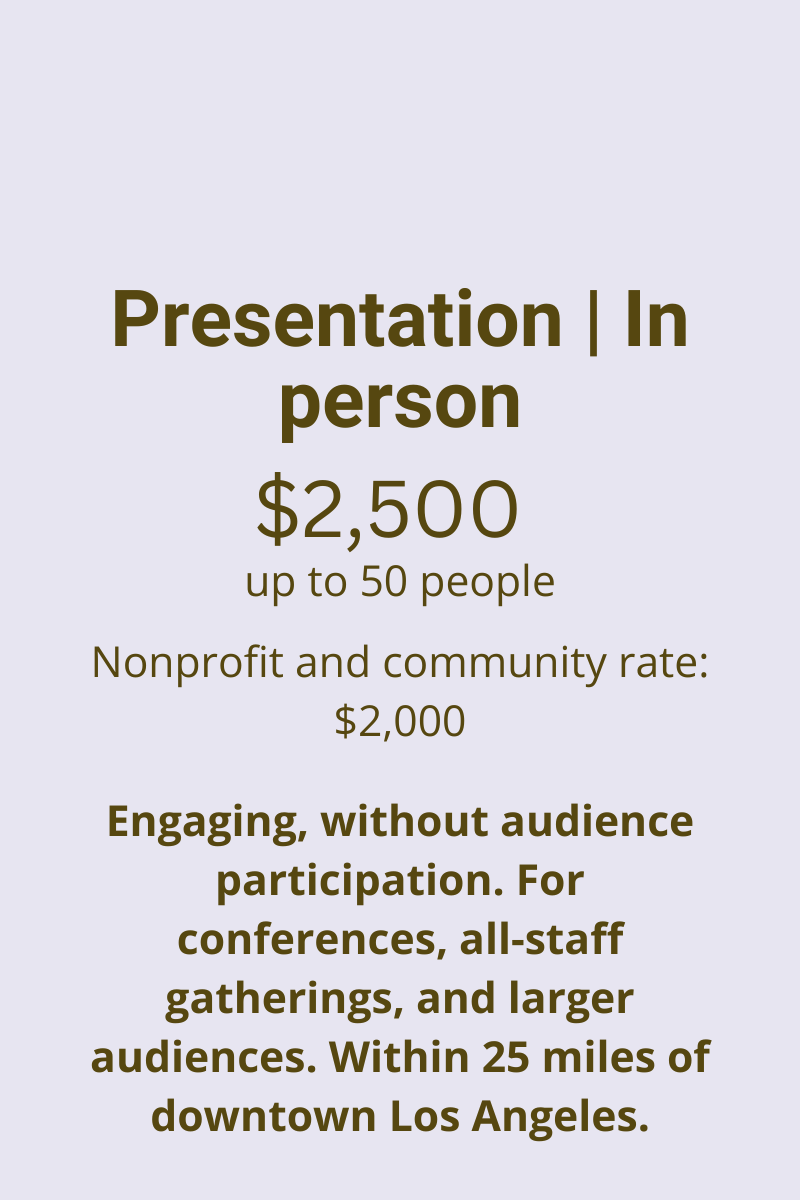
Each talk runs 45 to 60 minutes, including time for questions, and can be delivered in person or virtually. Talks are tailored to your audience before the event and are designed for groups of up to 25 people; presentations and keynotes are for larger groups. Talks are where I share ideas; workshops are where teams practice skills.
Other topics: I also speak on accountability in organizations, values in practice, and growing leaders from within. Ask about a talk on one of these or other topics.
Workshops: My two flagship workshops are Creative Conflict Resolution and People Skills: The Essentials. Both programs are ready-to-deploy, skills-based programs that can be standard or customized.
GREAT FOR: Leadership and management teams, HR and benefits teams, leadership retreats, and nonprofit networks.
Breathing Room: Wellbeing at Work
OVERVIEW: Let’s face it, people are tired and overworked. Many feel like they have to produce top-notch work every day, even as we understand that it’s unsustainable. Turnover, absenteeism, and lost productivity are cited again and again as signs that things need to change, but the responses fall short. So why do staff roll their eyes at workplace wellness efforts? Part of the answer is that many wellness efforts focus on fixing the worker without considering the environment in which they have to work. One-sided wellness efforts end up feeling like another requirement rather than an invitation to curiosity and exploration. Imposed wellness isn’t wellness; it’s another job. How do we move from work that is depleting to more sustainable models? How do we cultivate work cultures that encourage and support wellbeing? These are some of the questions that ground this talk. It invites you to look at both the individual and the workplace, and consider how to create breathing room in a hectic schedule, so that wellbeing is built into how the work gets done.
WHAT YOU GET
A planning call to discuss your group’s needs.
A facilitated one-hour talk tailored to your setting.
Practical shifts that make wellness efforts feel like an invitation, not a requirement.
Ideas for creating breathing room without adding another task.
A one-page handout.
GREAT FOR: In-house training and L&D teams, ATD chapters, faculty development programs, and nonprofit staff who lead trainings.
Engaged Learning: The Flawless Facilitator and Other Myths
OVERVIEW: In-house facilitators face many challenges, including how to deliver on organizational objectives through training and how to overcome participant resistance to trying new things. But resistance often has less to do with participants than with the myths we bring into the room. This talk begins with the question: What does an engaged training room look, sound, and feel like? From there it explores why engagement myths, such as the idea that you have to be a flawless facilitator, do a disservice to facilitators while locking participants into predetermined roles that are antithetical to learning. It invites you to consider what it means to co-create an environment that encourages participation, fosters meaningful and relevant discussion, and prioritizes critical thinking and application. Rather than demanding these things, you’ll leave with strategies and principles that change what happens in the training room, and that participants can take back to their own teams. This is the latest iteration of this talk, which stems from my years as a university lecturer and workshop facilitator.
WHAT YOU GET
A planning call to discuss your group’s needs.
A facilitated one-hour talk tailored to your setting.
Practical strategies and principles to implement in your training room.
A one-page handout.

EVERY TALK INCLUDES
Shaped by your context and your goals
Planned with you. A planning call to learn about your audience and goals.
Tailored to your context. Examples and scenarios drawn from your setting.
Choose the format. In person or on your virtual platform.
Something to take home. A one-page participant handout, ready to print or share.

PRICING
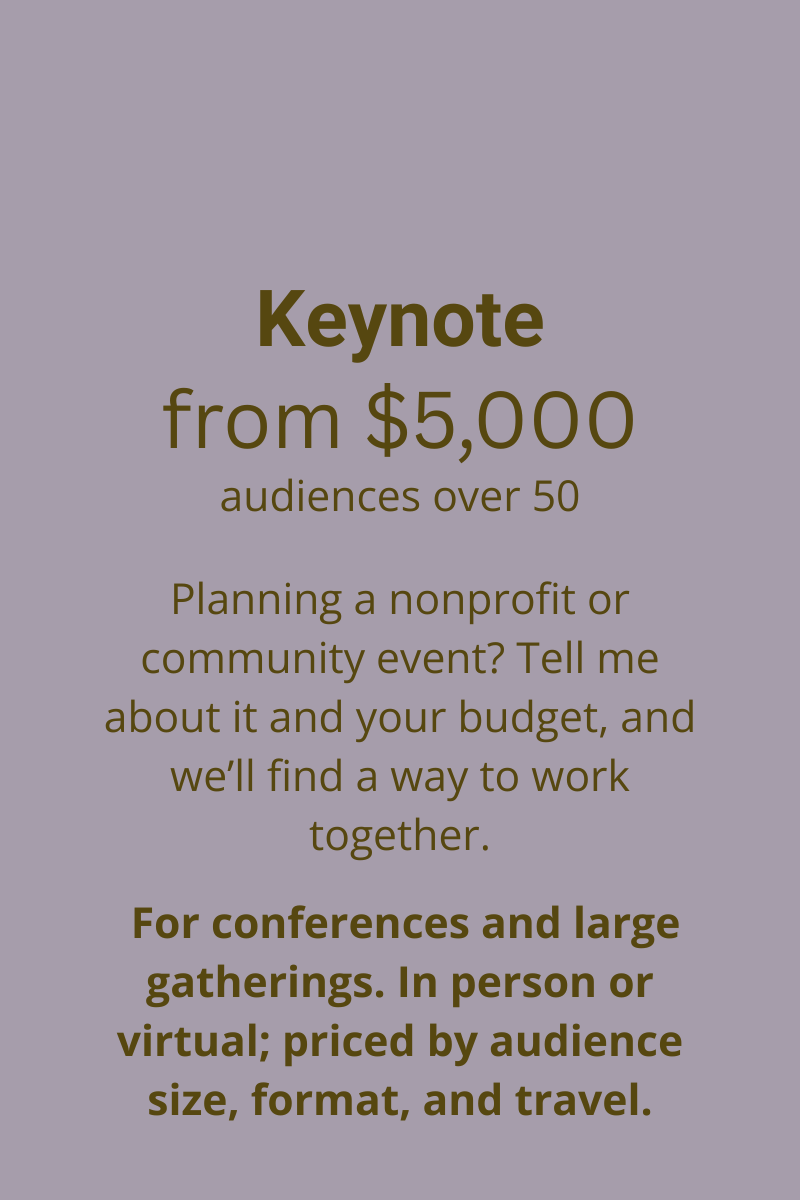
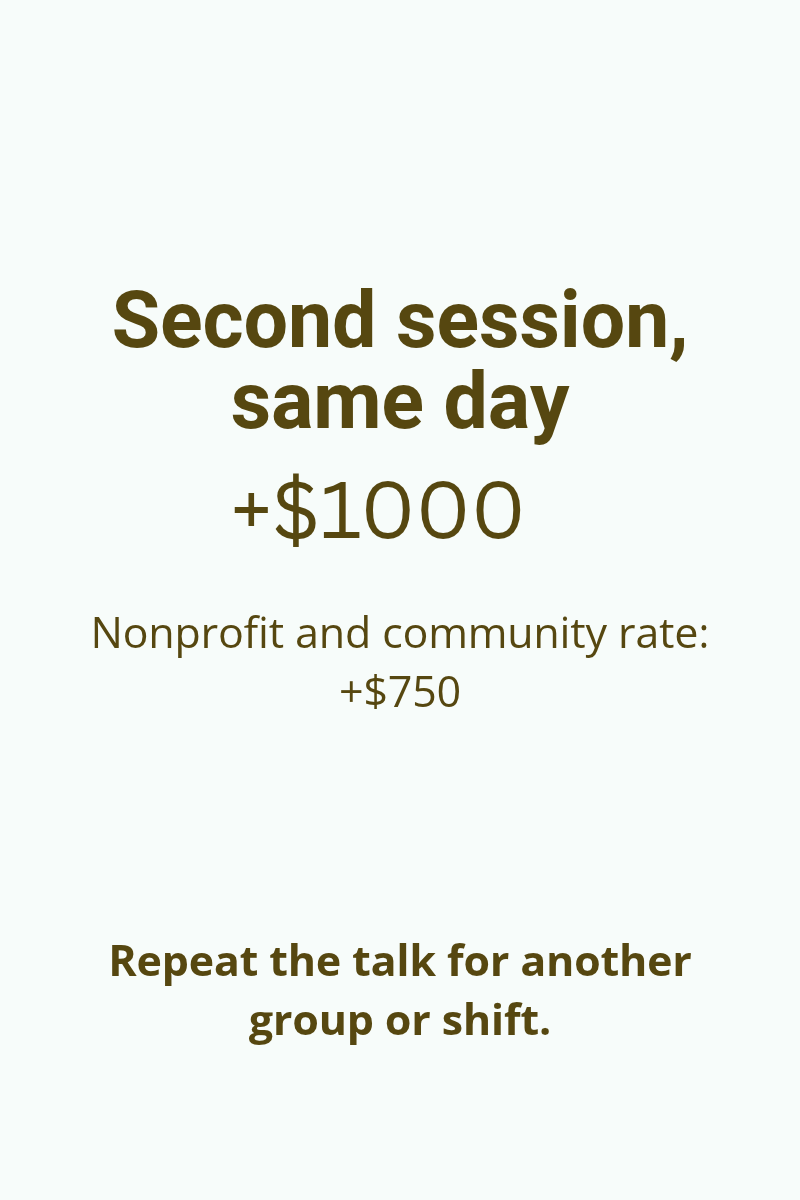
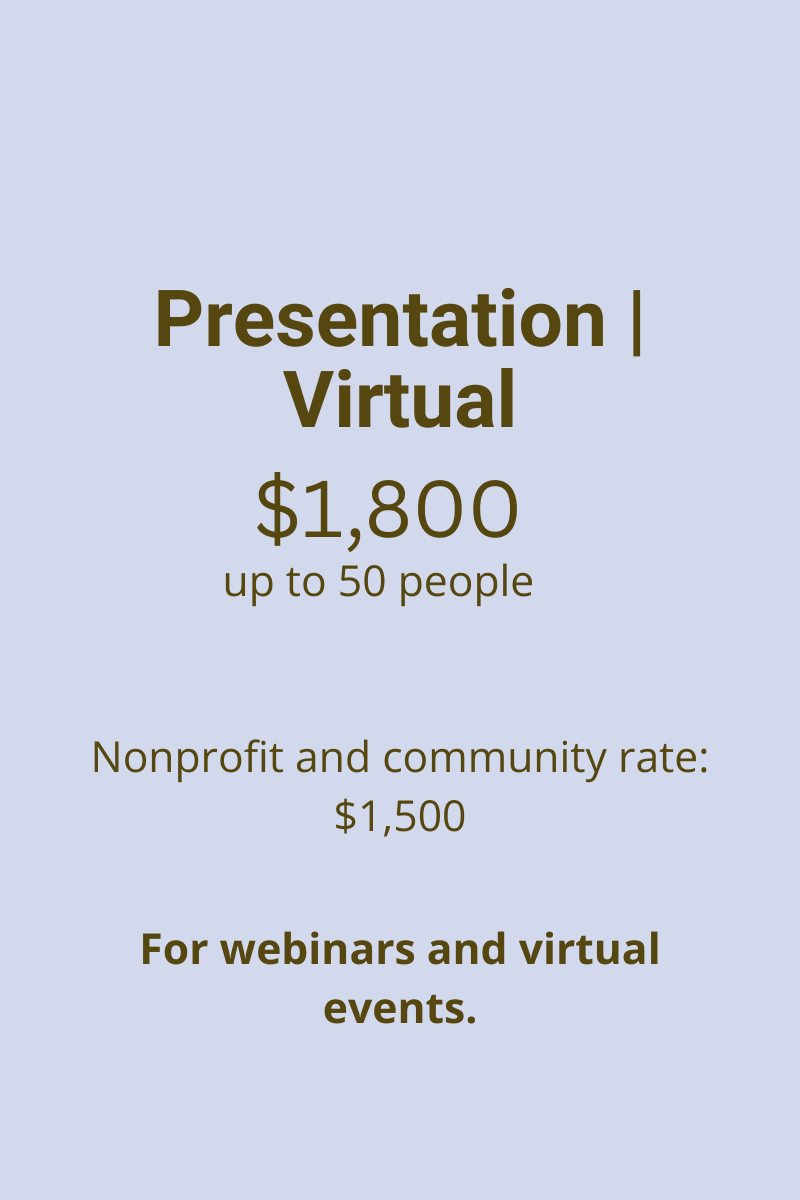
Every rate includes a planning call, tailoring to your group, delivery, and a participant handout. For in-person sessions, printing and materials are included, along with travel within 25 miles of downtown Los Angeles; events farther away add travel costs. Nonprofit and community rates are available to a limited number of organizations each year, and community-based organizations with smaller budgets are welcome to reach out. Public-sector and contract pricing is set by scope.
Customized talks: A talk built entirely around your event’s theme or your organization’s needs starts at $3,500.
Clear rates, everything included
FROM TALK TO LASTING CHANGE
If your group wants to go deeper, any talk can lead into the Creative Conflict Resolution or People Skills: The Essentials workshops, a supervisor or staff series, or train-the-trainer programs.